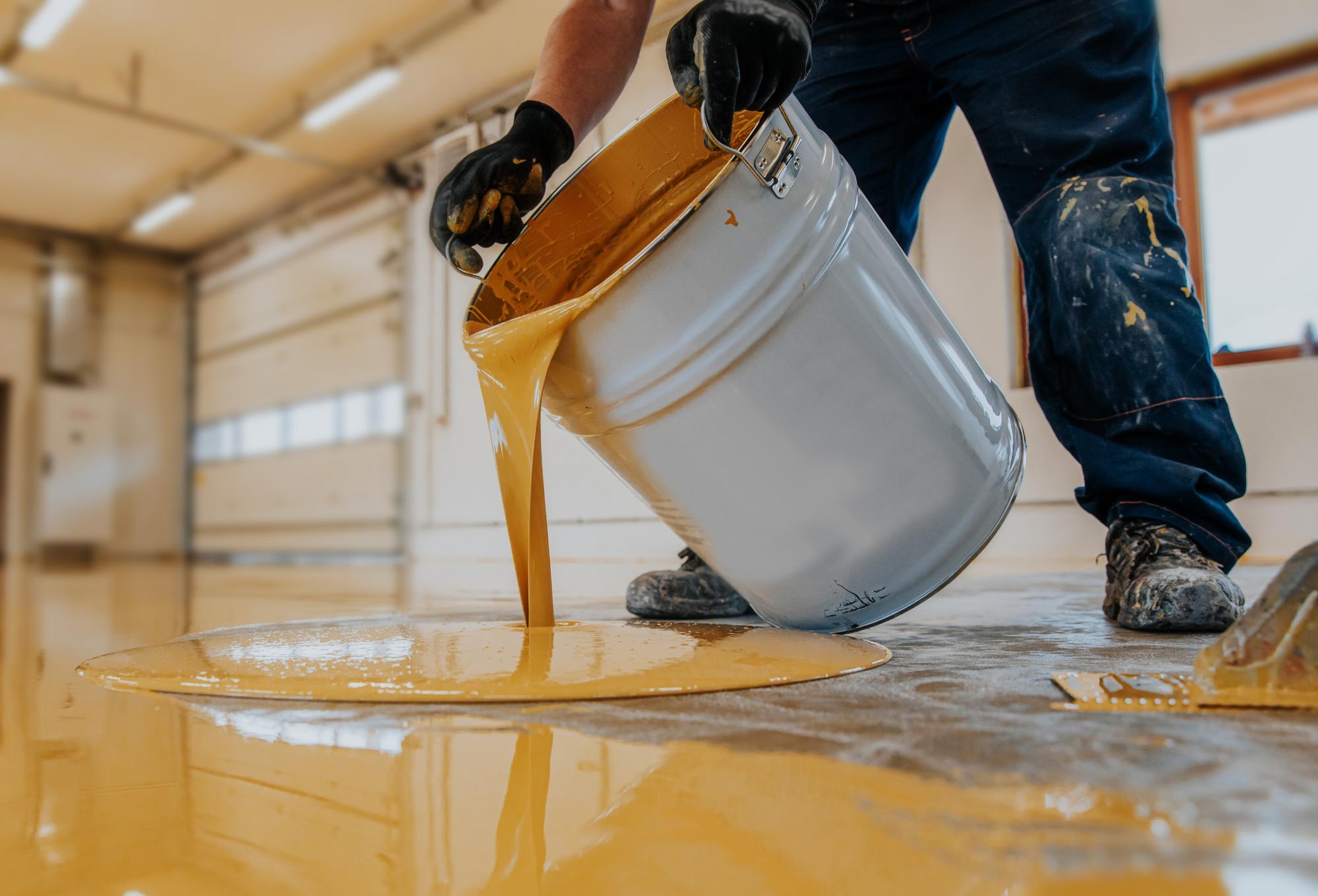
Why warehouse floors need coating
Phoenix is one of the fastest-growing logistics and distribution hubs in the Southwest, with warehouses, fulfillment centers and manufacturing facilities spread from the West Valley to Sky Harbor and beyond. Inside those buildings, the concrete floor is one of the hardest-working assets. Forklifts, pallet jacks and carts roll across it all day, every day. Pallets are dragged, product is dropped and chemicals are spilled. Over time, bare concrete wears, dusts and deteriorates, especially at joints and in high-traffic lanes.
Uncoated concrete creates real operational problems. Concrete dust settles on inventory and equipment, contaminating products and increasing cleaning costs. Worn joints cause jarring impacts that damage forklift wheels and loads. Stains and dark surfaces make the space feel dim and unsafe. A professional warehouse floor coating addresses all of these issues while making the facility safer, brighter and easier to maintain.
Benefits of warehouse floor coatings
- Abrasion and impact resistance. High-build systems withstand forklift traffic, pallet jacks and dropped loads.
- Dust control. Sealing the concrete stops the dusting that contaminates inventory and equipment.
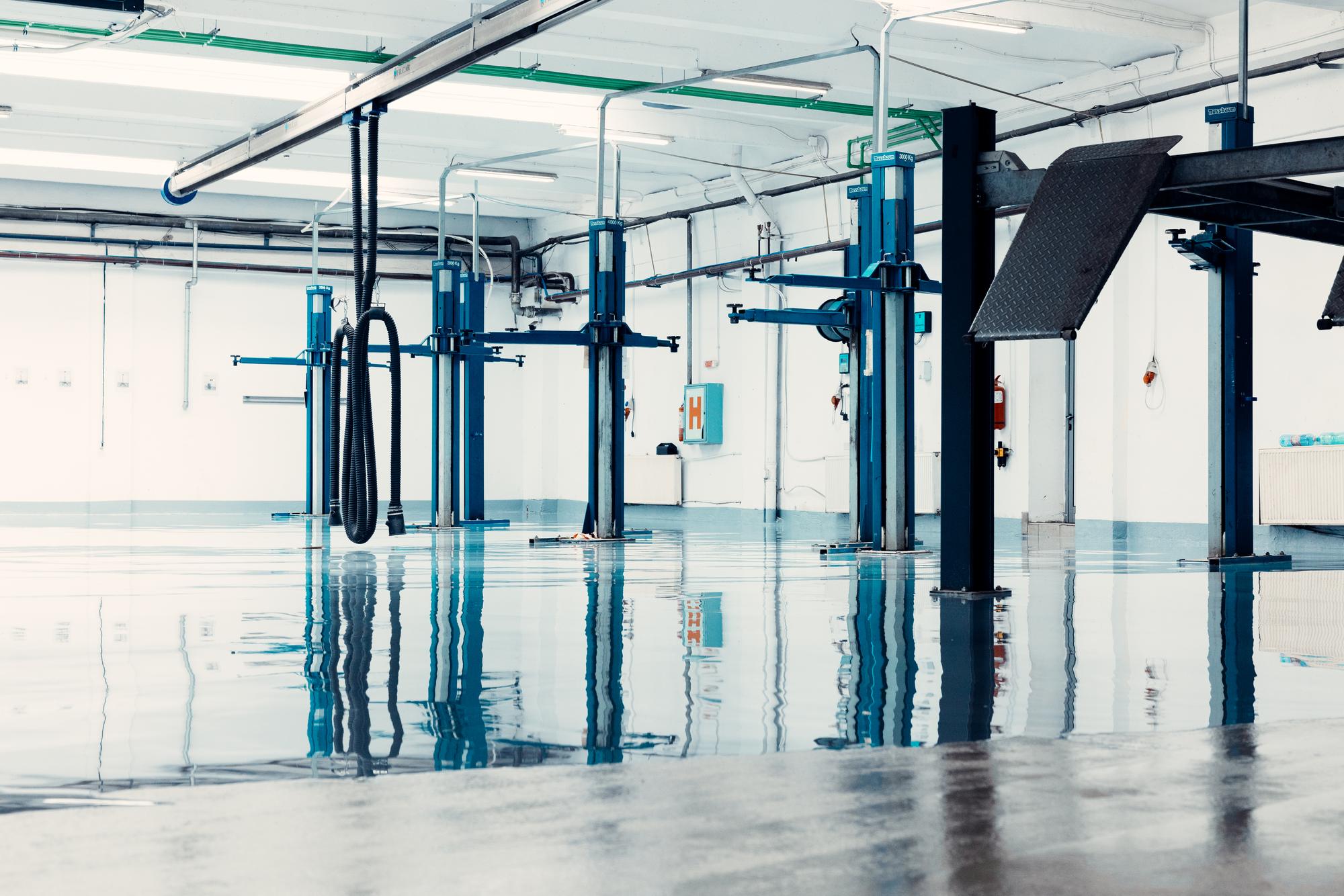
- Improved lighting. Light-colored, reflective floors significantly brighten a facility, improving visibility and safety.
- Chemical and spill resistance. Coatings resist oils, hydraulic fluid, battery acid and cleaning chemicals.
- Safety and organization. Striping, color-coded zones and markings guide traffic and define storage, staging and pedestrian areas.
- Easier cleaning. Smooth, sealed floors are easier to sweep and scrub, reducing maintenance time.
- Protected investment. Coatings protect the slab from wear, extending its useful life.
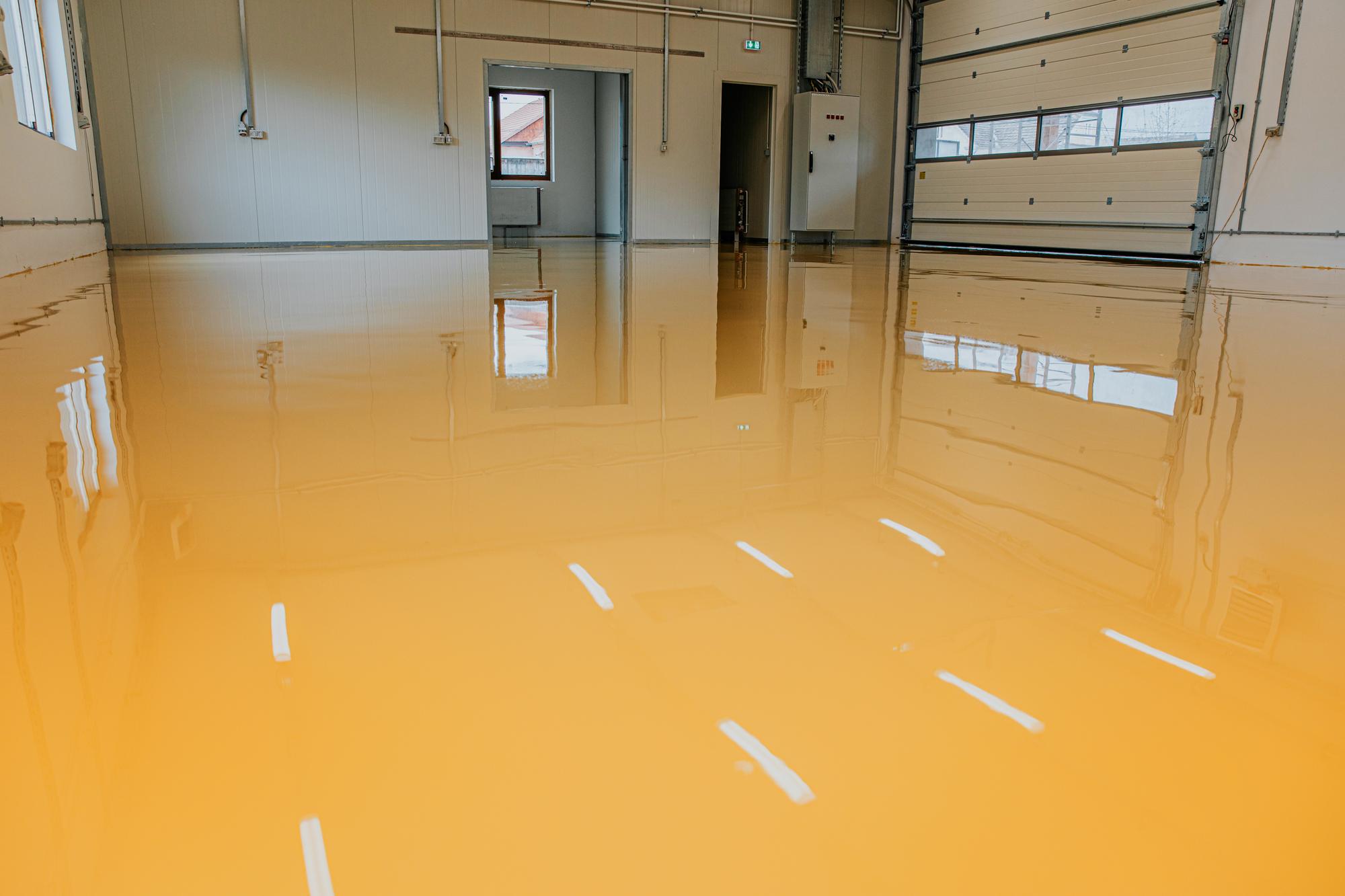
Systems for industrial environments
Warehouse floors vary widely in how they're used, so we specify systems based on traffic, loads, chemical exposure and budget.
High-build epoxy systems
Thick, 100% solids epoxy systems provide excellent abrasion resistance and impact strength for most warehouse environments. They can be finished in safety-focused colors such as light gray to maximize brightness.
Epoxy with urethane or polyaspartic topcoats
Adding a tough topcoat increases scratch and chemical resistance and helps the floor maintain its appearance under heavy traffic, especially near dock doors exposed to sunlight.
Polyurea and fast-cure systems
When downtime is critical, fast-curing polyurea and polyaspartic systems can significantly shorten return-to-service times, allowing work over weekends or short shutdowns.
Textured and anti-slip finishes
Ramps, wash areas, loading docks and spaces exposed to liquids benefit from broadcast aggregates for improved traction.
| Typical applications | Warehouses, distribution centers, manufacturing, storage, fabrication shops |
|---|---|
| System options | High-build epoxy, epoxy + urethane/polyaspartic, polyurea fast-cure |
| Safety features | Lane striping, pedestrian walkways, color-coded zones, anti-slip textures |
| Joint treatment | Semi-rigid joint fillers to protect edges and smooth forklift travel |
| Scheduling | Phased work, nights, weekends and planned shutdowns |
| Return to service | Varies by system; fast-cure options available |
Joint repair and slab preparation
In warehouses, control joints are one of the most common points of failure. Forklift wheels repeatedly strike unprotected joint edges, causing spalling that grows over time and creates bumps that damage equipment and loads. As part of our process, we clean out damaged joints, repair spalled edges and fill joints with semi-rigid fillers designed to support joint edges under wheel traffic while accommodating normal slab movement.
Preparation for industrial floors typically involves large ride-on or walk-behind diamond grinders or shot blasters with industrial dust collection. We remove contamination, old coatings and weak surface material to create a profile suited to the specified system. Oil-soaked areas receive special treatment so they don't compromise adhesion.
Plan your layout before we coat. Striping and zone layouts are easiest to install as part of the coating project. We'll work with your operations team to map out forklift lanes, pedestrian walkways, staging areas, racking locations and hazard zones before installation begins.
Safety striping and floor markings
Clear floor markings are one of the most cost-effective safety improvements a warehouse can make. We install durable, coating-integrated striping for forklift travel lanes, pedestrian walkways and crosswalks, staging and shipping areas, racking aisles, hazard zones around equipment, and fire extinguisher and electrical panel clearances. Because the striping is installed as part of the coating system, it lasts far longer than paint or tape applied over bare concrete.
Working around your operations
Shutting down a warehouse is costly, so we plan every project around your schedule. Common approaches include phasing the work aisle by aisle or section by section, working nights and weekends, coordinating with planned shutdowns or inventory moves and using fast-cure systems to minimize downtime. We'll provide a clear schedule and communicate closely with your team throughout the project to avoid surprises.
Dock areas and transitions
Loading docks and the zones just inside dock doors take more punishment than anywhere else in a warehouse. Trucks bring in heat, grit and moisture, and forklifts brake and turn hard at these transitions. We often specify a heavier system or additional texture in dock areas, use UV-stable topcoats where sunlight hits the floor and carefully detail transitions at dock levelers and door thresholds so edges stay protected.
Considerations for Phoenix facilities
Many Phoenix warehouses aren't fully air-conditioned, and slab temperatures can rise significantly in summer, especially near dock doors. Large roll-up doors also let in sunlight and blowing dust. These conditions affect both installation and long-term performance. We account for them by choosing materials with appropriate working times, scheduling work during cooler hours, using UV-stable topcoats near openings and controlling dust during application.
Cost factors
Warehouse coating costs depend on total square footage, slab condition, joint repair needs, removal of existing coatings, the system specified and its thickness, the amount of striping and markings and scheduling requirements. Large projects often benefit from lower per-square-foot pricing. We'll provide a detailed proposal outlining the system, scope, schedule and pricing.
Choosing floor colors for a warehouse
Color affects more than appearance in an industrial building. Light gray is the most common choice because it reflects light, hides tire marks reasonably well and provides strong contrast for yellow, white, blue and red safety markings. Some facilities use different colors to separate zones — for example, a darker color for heavy-traffic lanes and a lighter color for storage and staging areas. Others coordinate floor colors with corporate branding in visible areas such as showrooms or shipping counters. We'll recommend a palette that supports both safety and practicality.
Signs your warehouse floor needs a coating
- Visible concrete dust on racking, inventory and equipment, even after cleaning.
- Spalled or crumbling joints that jolt forklifts as they cross.
- Dark, stained or uneven floors that make the building feel dim.
- Faded or worn striping that no longer guides traffic clearly.
- Peeling paint or failed coatings in high-traffic lanes.
- Oil and chemical stains that have soaked into the concrete.
If any of these sound familiar, a site visit is the best next step. We'll assess the slab, joints and traffic patterns and recommend a solution that fits your operation and budget.
A floor that supports productivity
A coated warehouse floor isn't just about appearance. Brighter floors help workers see clearly, smooth joints reduce wear on equipment, clear markings keep traffic organized and dust-free surfaces protect product quality. Together, those improvements support a safer, more efficient operation and a better working environment for your team.
Maintaining your warehouse floor
Regular sweeping and auto-scrubbing with neutral cleaners keep coated warehouse floors bright and safe. Promptly clean up spills, and inspect joints periodically. Keep forklift wheels clean and in good repair to reduce wear. In very high-traffic lanes, a fresh topcoat after several years can restore appearance and protection without replacing the full system.
Why choose Phoenix Epoxy Flooring Pros
We bring industrial-grade equipment, proven systems and careful planning to every warehouse project. Our goal is a floor that's safer, brighter and easier to maintain — installed with minimal disruption to the work that keeps your business running.
Warehouse Floor Coatings FAQ
Can a coated warehouse floor handle forklift traffic?
Yes. We specify high-build, abrasion-resistant systems designed for forklifts, pallet jacks and heavy rolling loads.
How do you handle damaged control joints?
We clean out and repair spalled joint edges, then fill joints with semi-rigid fillers that support forklift wheels while allowing normal slab movement.
Can you work while our warehouse is operating?
Yes. We commonly phase projects by section and work nights and weekends to keep your operation running.
Do you install safety striping?
Yes. Lane lines, pedestrian walkways, staging areas and hazard zones can be installed as part of the coating system for long-lasting visibility.
How long until forklifts can return?
It depends on the system and conditions. Fast-cure polyurea and polyaspartic systems can significantly shorten return-to-service time; we'll provide a specific schedule in your proposal.
Will a coating stop concrete dusting?
Yes. Sealing the concrete surface stops the fine dust that bare slabs release, protecting inventory and equipment.
Can you coat around racking that is already installed?
Often, yes. We can work around fixed racking and coat open aisles, or coordinate with your team to move inventory in phases. We'll plan the best approach during the site visit.
Will the coating be damaged by pallet dragging?
High-build systems resist abrasion well, but dragging pallets with exposed nails can scratch any floor. Using pallet jacks and keeping pallets in good repair will extend the life of the coating.
Do you offer topcoat refreshes later?
Yes. In heavy-traffic lanes, a topcoat can be refreshed after several years to restore protection and appearance without replacing the full system.
What size warehouse projects do you take on?
We handle everything from small storage buildings and shops to large distribution floors, and we scale crews and equipment to the project.